호텔이라는 정교하게 통제된 인위적 공간에서 일하며 마주한 가장 깊은 정직함은, 역설적이게도 '녹아내리는 얼음'의 유연한 거부였다.
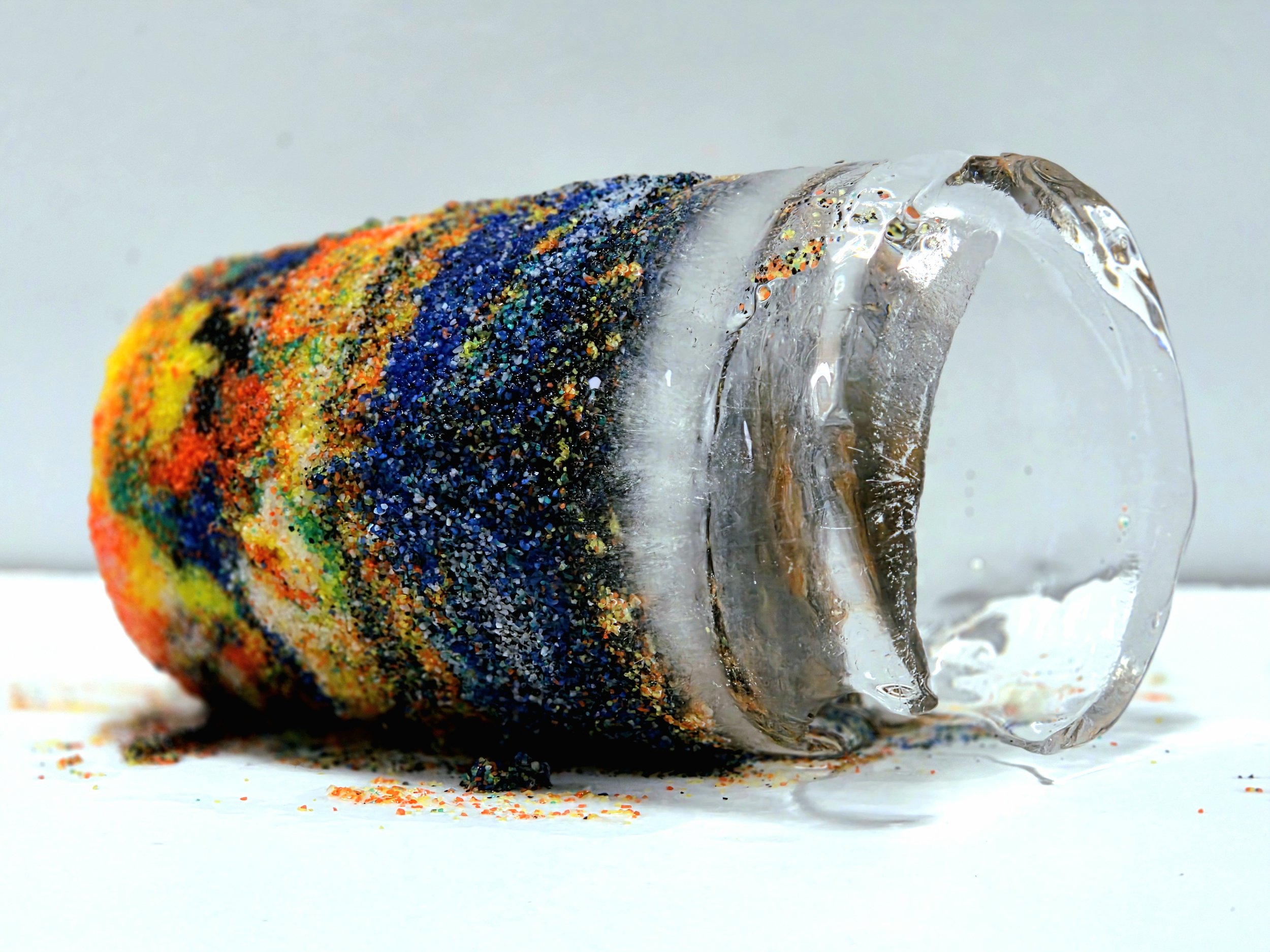
물이 얼고 안료가 섞이는 순간, 조형의 주도권은 작가를 떠나 재료 자체로 이동하며 얼음이 먼저 그림을 그린다.
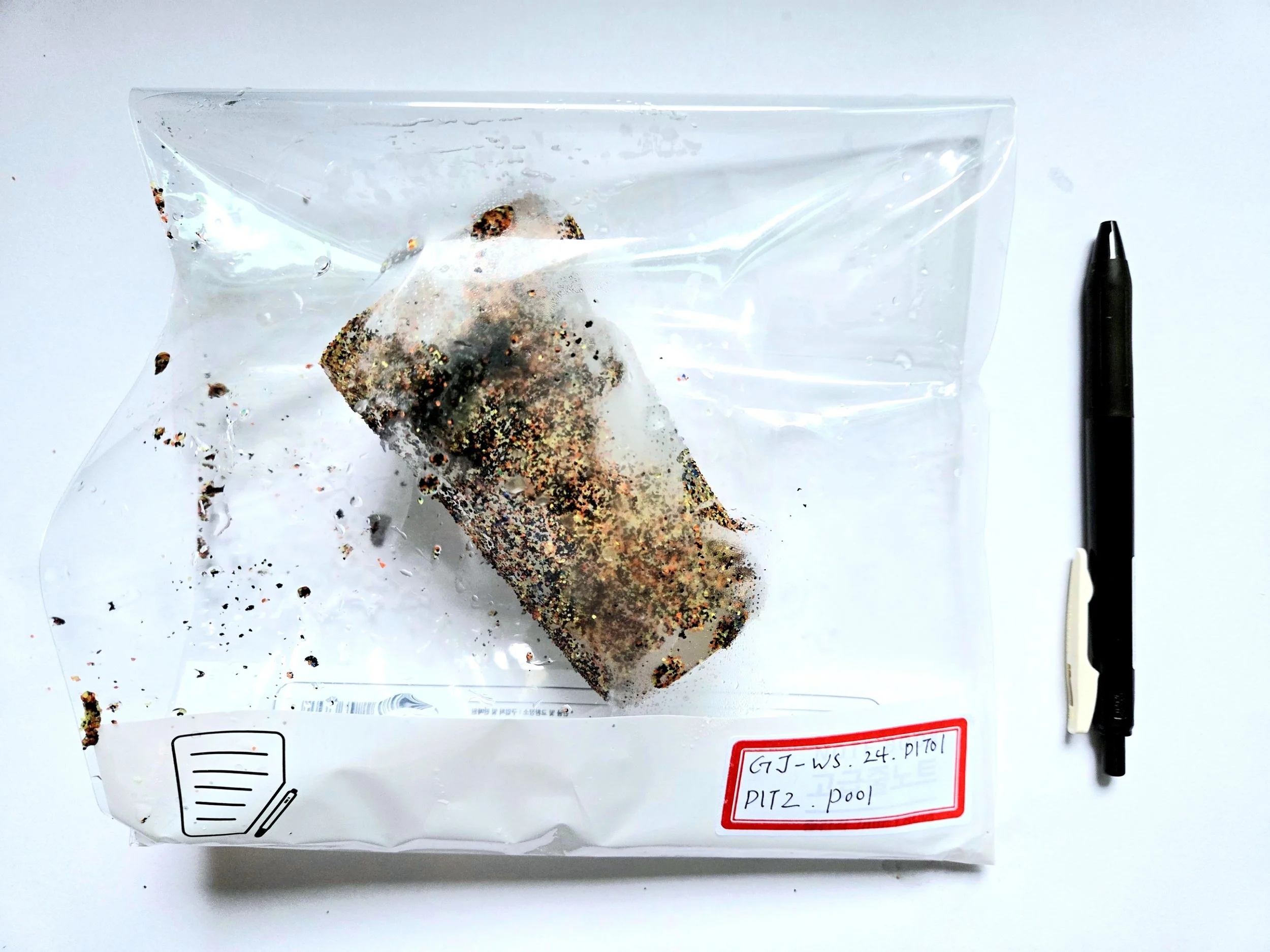
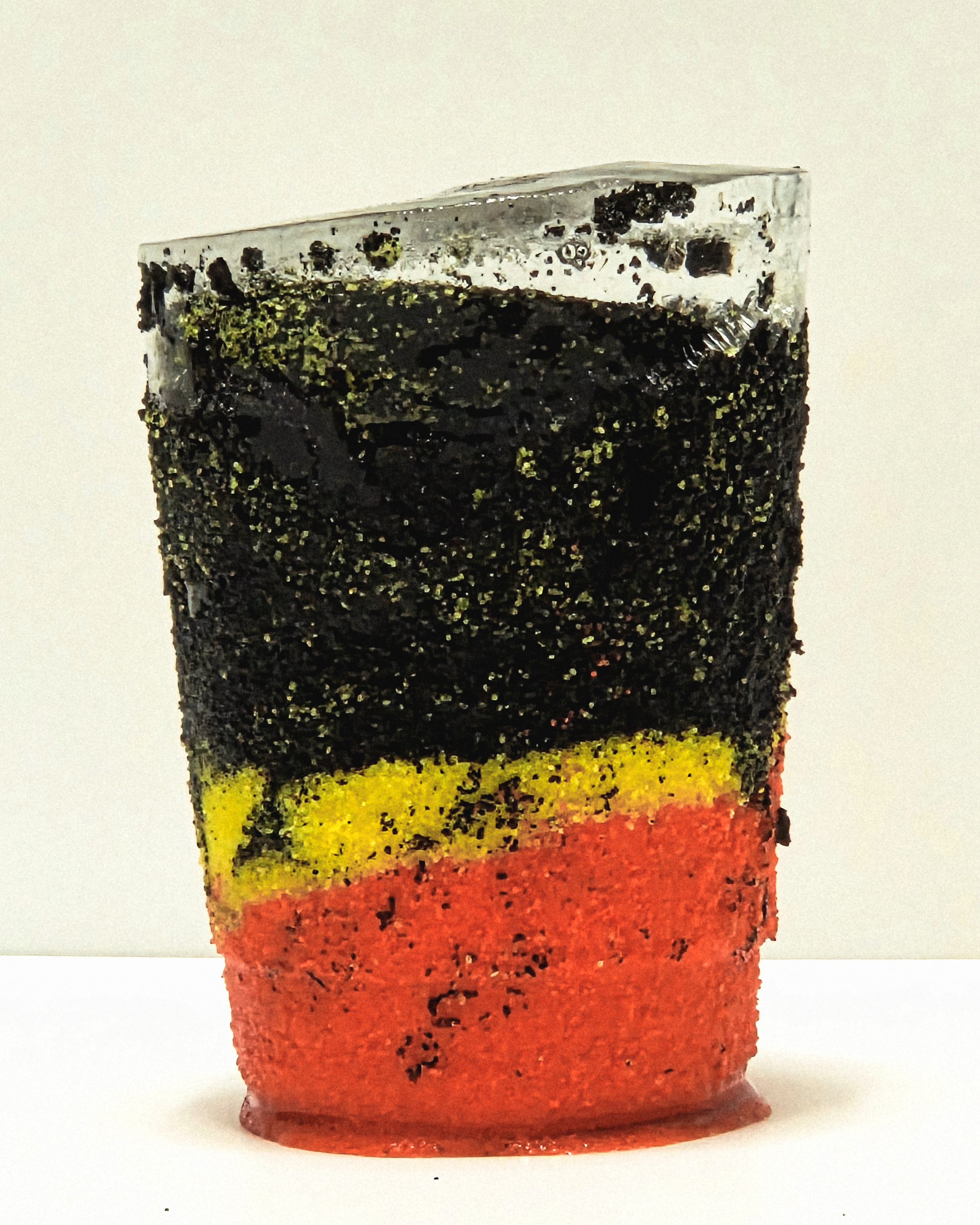
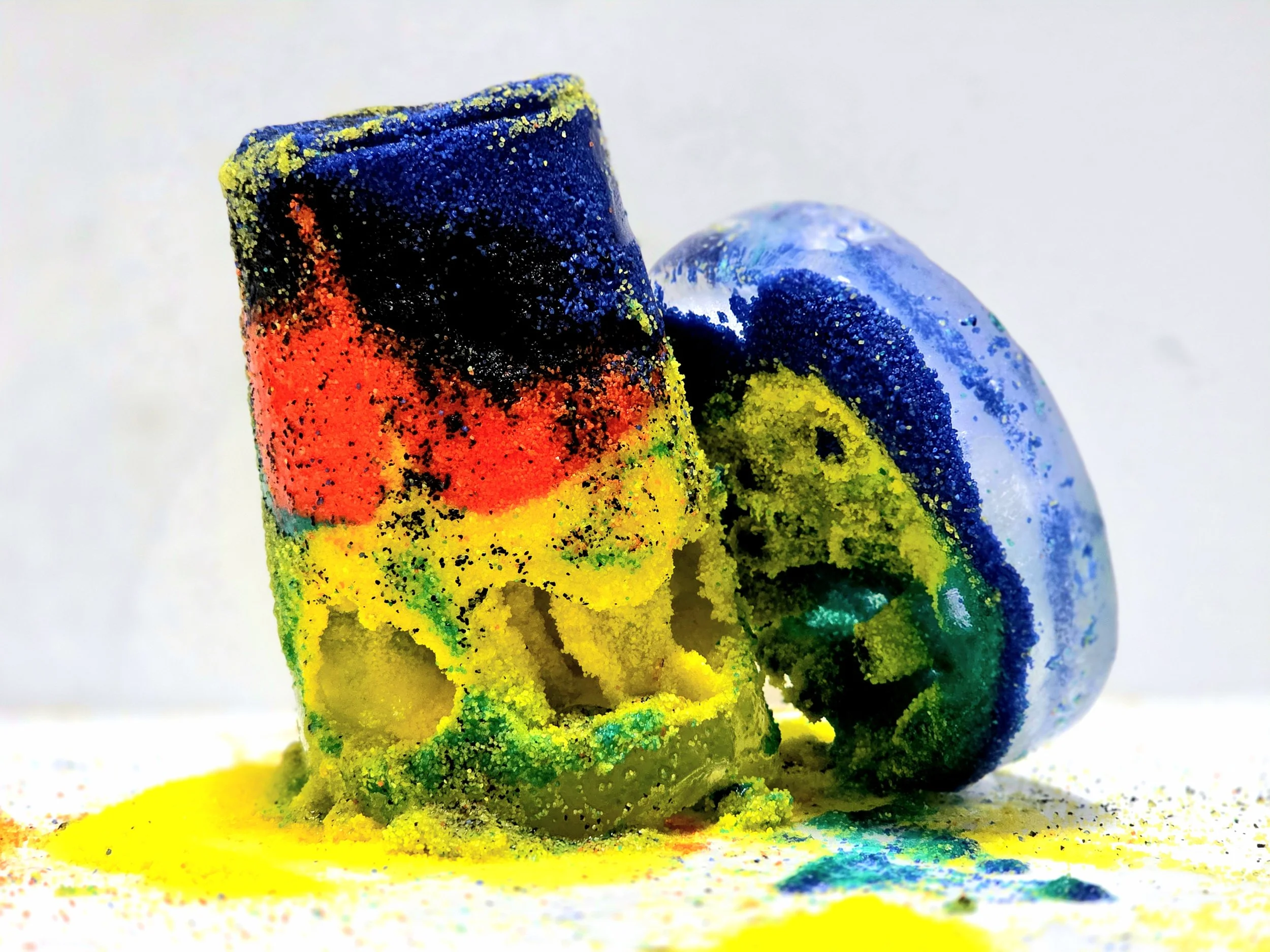
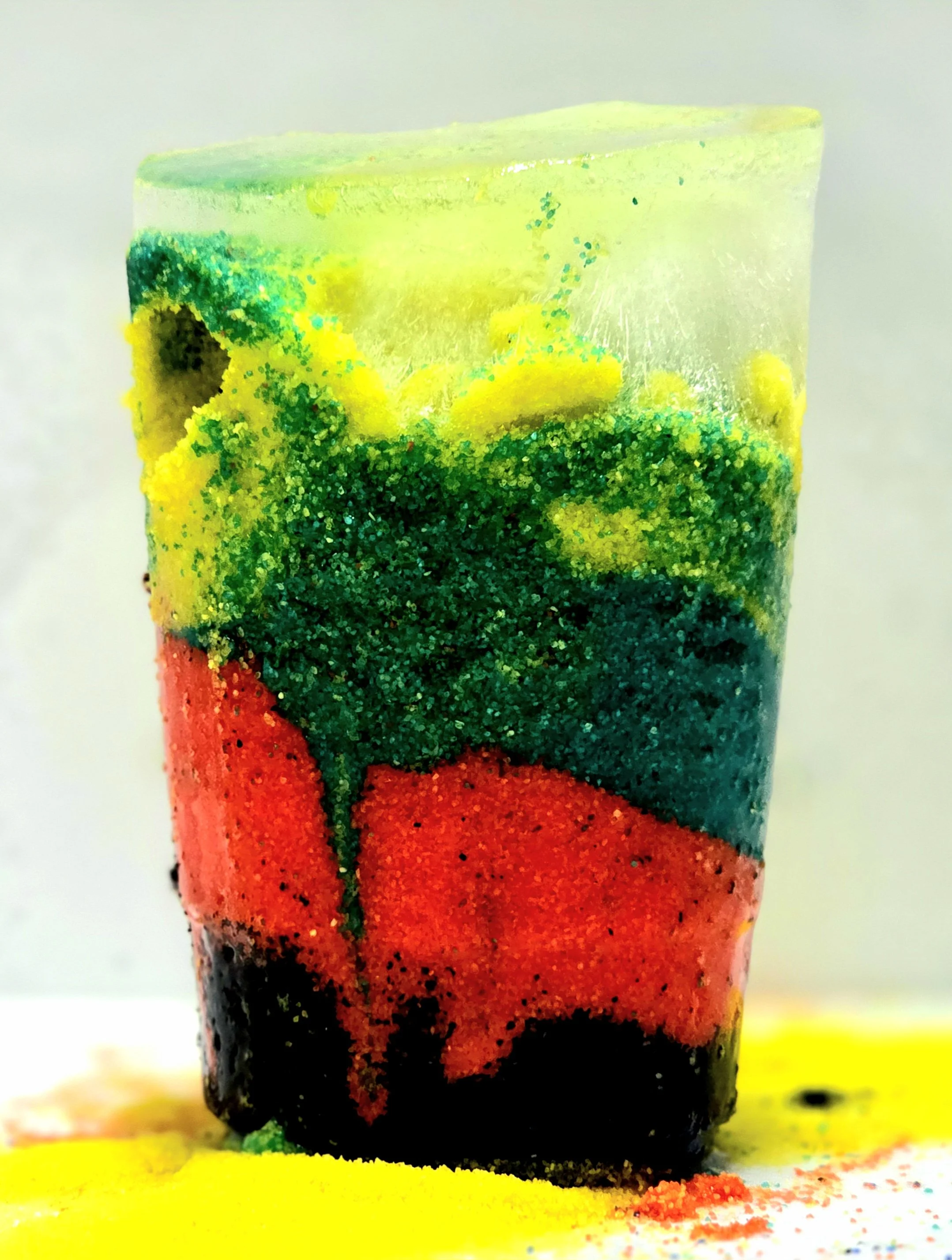
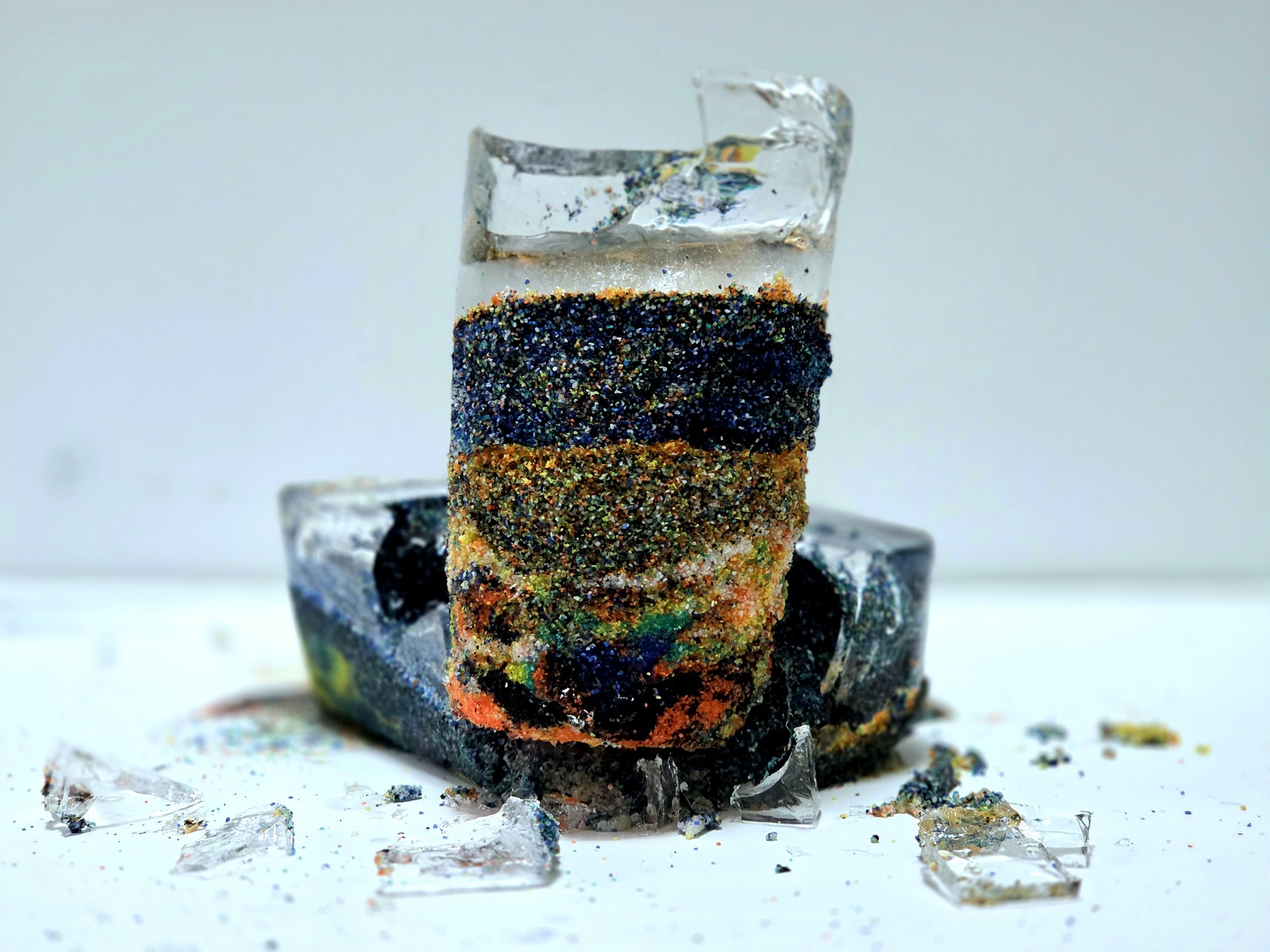
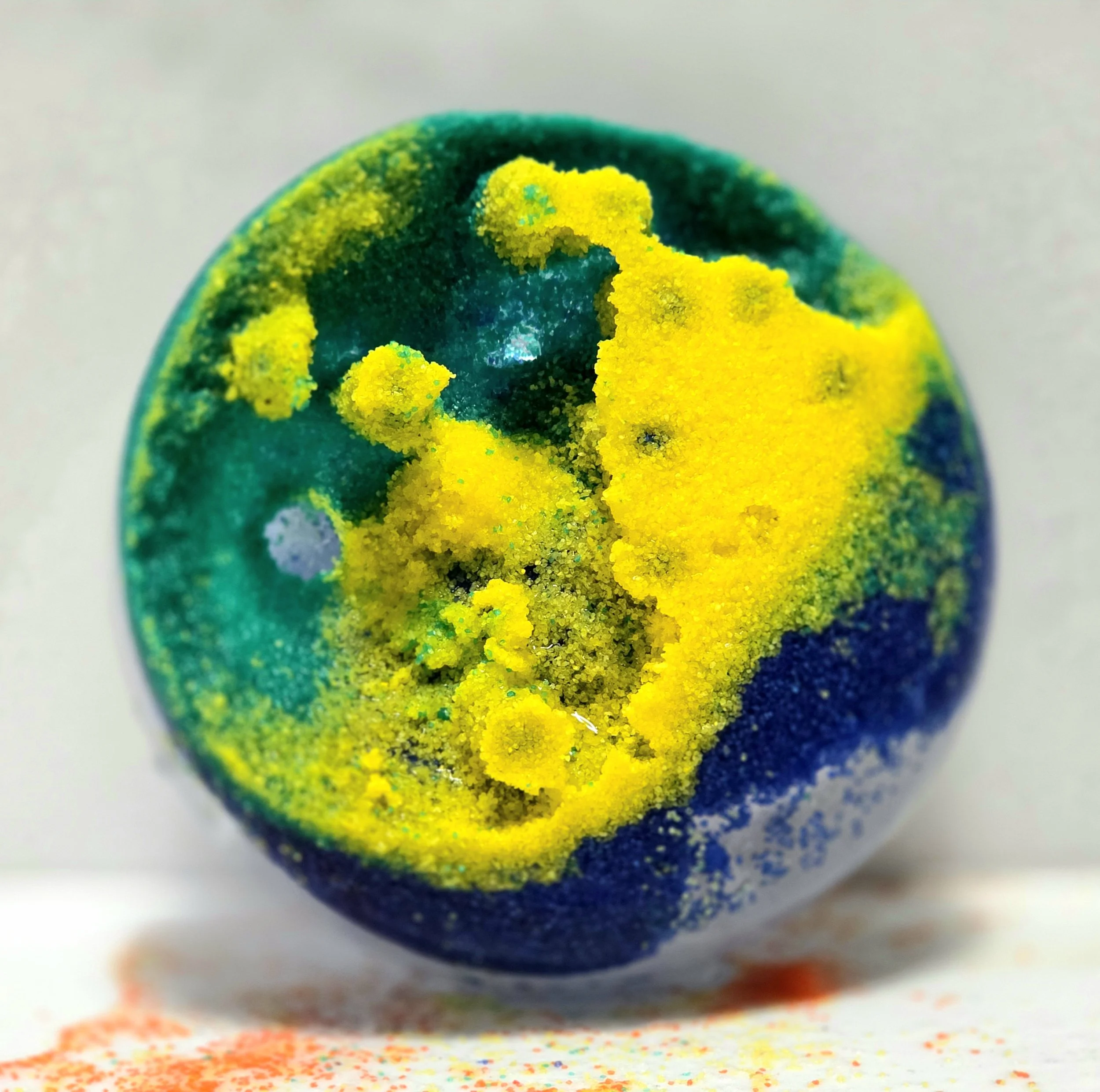
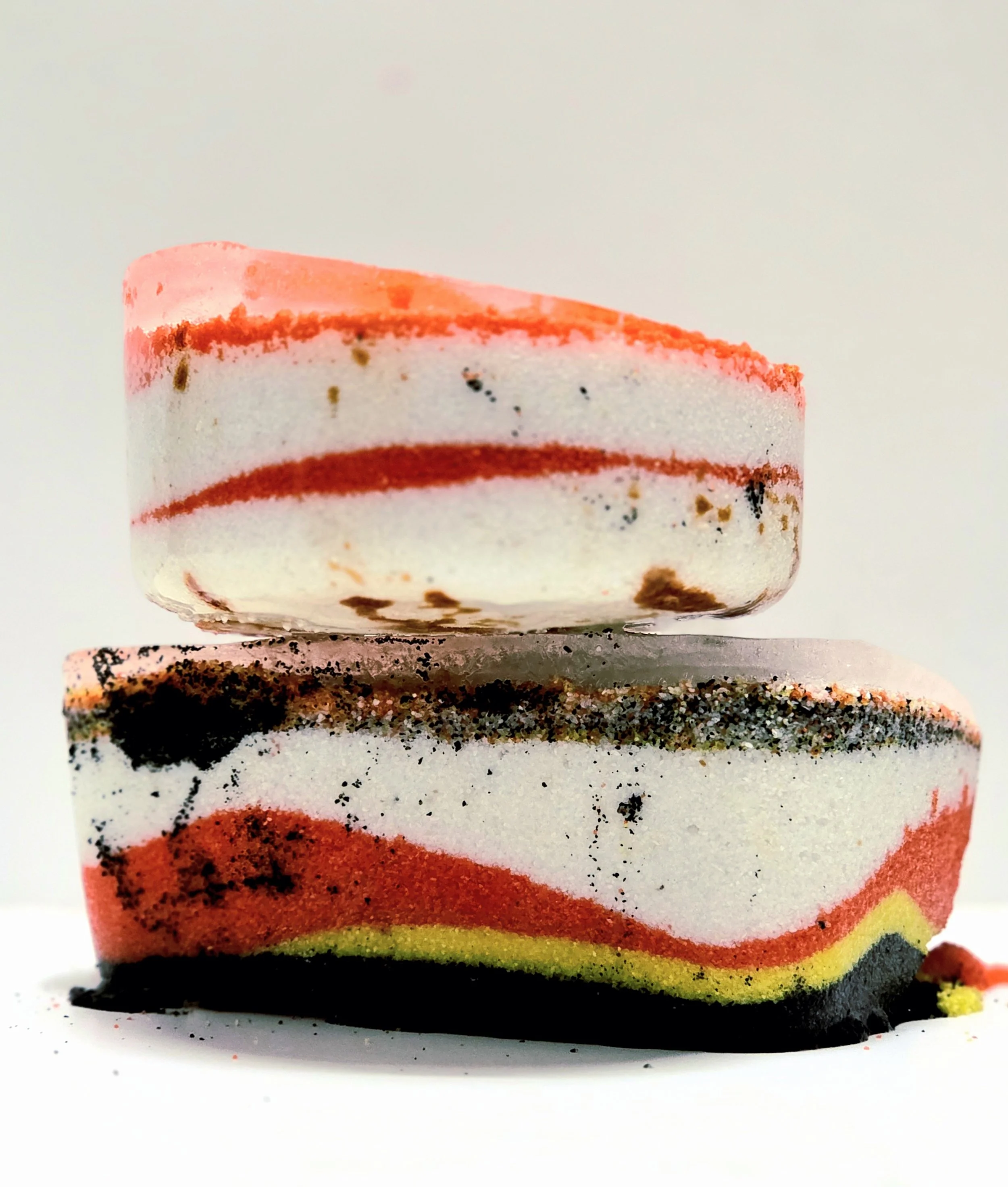
작품 〈얼음의 지층: 불완전한 발굴의 서사〉는 인간 중심의 역사 너머에서 비인간 주체인 '얼음'이 미세한 단위로 지질학적 지층을 발굴해 내는 사변적 고고학이다.
바이마르의 서늘한 기후, 경주의 천년 신라 지층, 가슴속 열대의 뜨거운 단층선들은 얼음이라는 유연한 매개체를 통해 새로운 시간의 층으로 재구성된다.
경주의 청색 유물: 고도의 서늘한 시간성, 청동의 녹, 천문학적 착시를 얼음 속에 감싸고 녹여냄으로써 원본이 사라진 옛 기호들을 가상으로 발굴한다.
열대 단층선: 태양의 열기와 타오르는 붉은 흙을 얼음의 차가운 결합력으로 조립하여, 현실보다 더 현실 같은 시뮬라크르의 지층을 구축한다.
단단히 얼어붙은 오브제들은 결국 녹아내리고 사라진다. 그러나 얼음이 스스로 지층을 형성하고 안료를 배열하며 자신을 드러내는 그 순간이야말로 가장 정직하고 윤리적인 찰나이자, 억압되었던 이야기들이 떠오르는 창이 된다.
역사와 유물 또한 사라지기 전 잠시 머무르는 시뮬라크르에 불과할지도 모른다. 녹아내림이 유예되는 이 불완전한 해체의 과정 속에서 우리는 마침내 참된 현실의 감각과 직면한다.